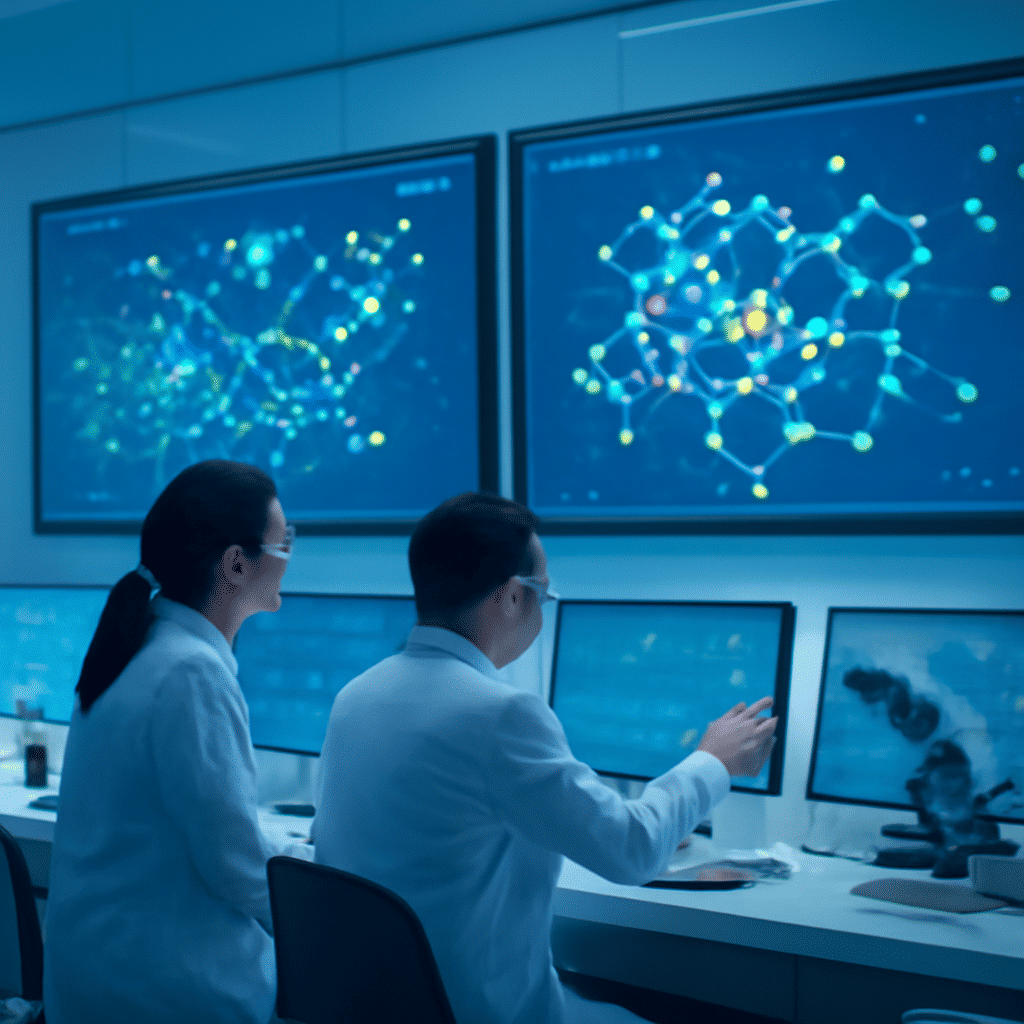
In the realm of healthcare, drug discovery traditionally has been a lengthy, laborious, and expensive process, often taking over a decade from initial research to market availability. The advent of artificial intelligence (AI) is, however, revolutionizing these processes, offering unprecedented speed and efficiency. By leveraging AI, researchers and pharmaceutical companies are now paving new pathways that could significantly accelerate the development of new medications, bringing hope to millions waiting for more effective treatments.
One of the most significant contributions of AI in drug discovery is its ability to swiftly analyze vast datasets. Modern drug discovery requires sifting through enormous volumes of biological and chemical data, an endeavor that could take years using conventional methods. AI excels in processing these datasets, recognizing patterns and generating insights that might elude traditional analytics. Machine learning algorithms can predict how compounds will interact with biological targets, assisting in the identification of potential drug candidates with increased precision and less time.
Moreover, AI is instrumental in the design of new molecules. Through techniques like generative adversarial networks (GANs) and reinforcement learning, AI systems can create novel chemical compounds that meet specified criteria for effectiveness and safety. This ability to virtually simulate and optimize compound structures accelerates the preliminary stages of drug development and reduces dependency on sheer trial-and-error experimentation.
Another pivotal advantage of AI is its role in repositioning existing drugs, a process where medications developed for one condition are repurposed for another. AI algorithms analyze existing data to identify new potential uses for approved or shelved drugs, offering a faster and more cost-effective path to bringing therapies to market. This approach bypasses several stages of traditional drug development, as the safety profiles of these drugs are often already established, thus expediting their availability to patients.
The drug development pipeline is fraught with risk, primarily due to the high attrition rate of drug candidates. Here too, AI can significantly reduce risk by improving prediction accuracy in early stages. By modeling complex biological interactions, AI can enhance the selection process for drug candidates, increasing the success rate of clinical trials. This not only saves time and resources but also steers efforts towards more economically viable and promising therapies.
Despite these advantages, the integration of AI into drug discovery is not without challenges. The quality of AI’s outputs heavily relies on the quality of data input, and incomplete or biased datasets can lead to flawed predictions. Moreover, the pharmaceutical industry is heavily regulated, and integrating AI-driven methodologies poses unique challenges in terms of compliance with existing regulations.
Ethical considerations also accompany the rise of AI in drug discovery. Transparency in AI decision-making processes is critical to ensuring that decisions are justifiable and understandable, a necessity when human health is at stake. Additionally, the proprietary nature of AI algorithms raises questions about intellectual property and sharing of innovations in a typically protective industry.
As the intersection between AI and drug discovery continues to grow, collaboration between technologists, biologists, chemists, and policy-makers will be crucial. Such interdisciplinary cooperation will ensure that AI is not merely a tool, but a transformative force that reshapes the landscape of drug development, making medications more accessible and affordable to those who need them most.
In conclusion, artificial intelligence holds promise to drastically alter the process of drug discovery, shortening the time from laboratory to pharmacy shelf, reducing costs, and ultimately improving patient outcomes. While hurdles remain, the potential benefits of integrating AI into this field are compelling, offering a future where health breakthroughs can occur at a pace once considered science fiction.