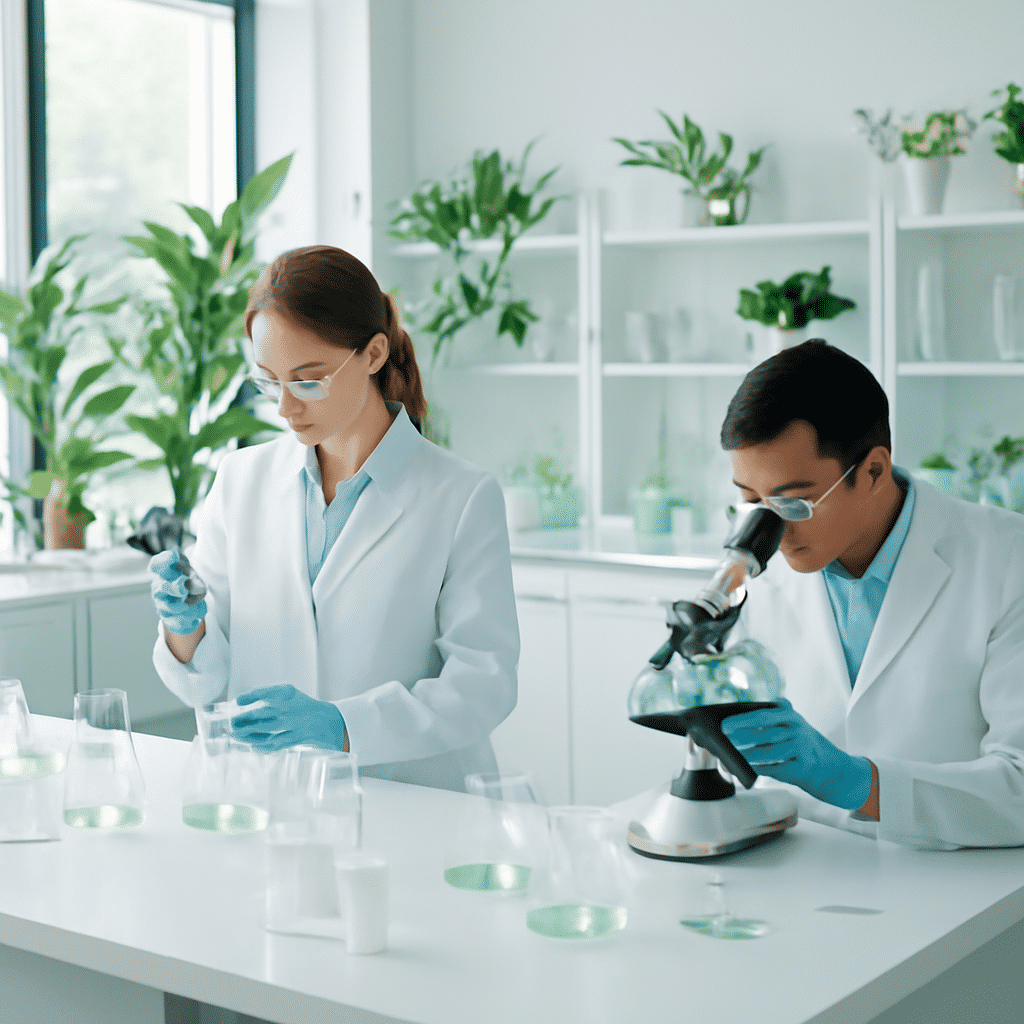
In recent years, the chemical industry has been undergoing a significant transformation, driven by the urgent need to address environmental challenges and promote sustainability. This movement, often referred to as "sustainable chemistry," focuses on developing eco-friendly chemical solutions that minimize environmental impact while maximizing efficiency and safety. Such innovations are setting new standards across research and industry, paving the way for a cleaner and greener future.
At the heart of sustainable chemistry is the concept of green chemistry, which involves designing products and processes that reduce or eliminate the use and generation of hazardous substances. This approach not only considers the end product but also scrutinizes the entire production process, with an emphasis on using renewable resources and minimizing waste. By prioritizing these principles, researchers and companies aim to reduce the ecological footprint of chemical manufacturing and contribute to a more sustainable world.
One of the most promising innovations in sustainable chemistry is the development of bio-based chemicals. These chemicals are derived from renewable biological resources such as plants, agricultural waste, and even algae. Unlike traditional petrochemical-based substances, bio-based chemicals are often biodegradable and have a significantly lower carbon footprint. For instance, polylactic acid (PLA), a biodegradable polymer derived from corn starch, is being used increasingly in packaging and consumer goods as a sustainable alternative to conventional plastics.
Another breakthrough in sustainable chemistry is the advancement of catalytic processes. Catalysts, which accelerate chemical reactions without being consumed, play a crucial role in enhancing the efficiency of chemical production. Innovative catalysts can enable the use of less energy and milder reaction conditions, reducing both costs and environmental impact. Recent developments in nanocatalysts and biocatalysts have shown particular promise, offering higher selectivity and activity for green processes in various industries, including pharmaceuticals and petrochemicals.
In addition to these innovations, there is a growing emphasis on the development of safer chemicals. Traditionally, the toxicity and environmental persistence of many chemicals have posed significant risks to human health and ecosystems. Recent regulatory frameworks, such as the REACH (Registration, Evaluation, Authorisation, and Restriction of Chemicals) regulation in the European Union, are pushing industries towards the creation of less hazardous substances. Researchers are now using computational tools and high-throughput screening to design chemicals with reduced toxicity and environmental persistence, ensuring they meet rigorous safety standards.
The role of technology cannot be overstated in the pursuit of sustainable chemistry. Artificial intelligence (AI) and machine learning are being leveraged to optimize chemical processes and predict the environmental impact of new compounds. By using advanced algorithms, scientists can rapidly model and simulate various chemical reactions, leading to more efficient and less resource-intensive processes.
Furthermore, the adoption of circular economy principles is influencing the way chemicals are designed and consumed. The focus is shifting from a linear model of production and disposal to a circular approach where materials are reused, recycled, and remanufactured. In practice, this means designing products with their end-of-life in mind, promoting the recyclability of materials, and recovering valuable components from waste streams.
These pioneering eco-friendly solutions are not only setting new research and industry standards but also offering economic benefits. Sustainable chemistry often leads to lower costs in waste management, energy consumption, and raw materials. Additionally, it opens up new market opportunities for companies that can offer greener alternatives, tapping into the increasing consumer and regulatory demand for sustainable products.
In conclusion, sustainable chemistry is revolutionizing the chemical industry by fostering innovations that prioritize environmental and human health. The integration of renewable resources, advanced catalytic processes, safer chemical design, and cutting-edge technologies is steering the sector towards a future that aligns economic growth with ecological responsibility. As these practices become more mainstream, the vision of a sustainable and resilient chemical industry is gradually becoming a reality.